 Sometimes, I just have to take a break and remember that there's a real world out there. For all those who are working on frantically getting papers done, don't worry! We'll make it.
Sunday, August 4, 2013
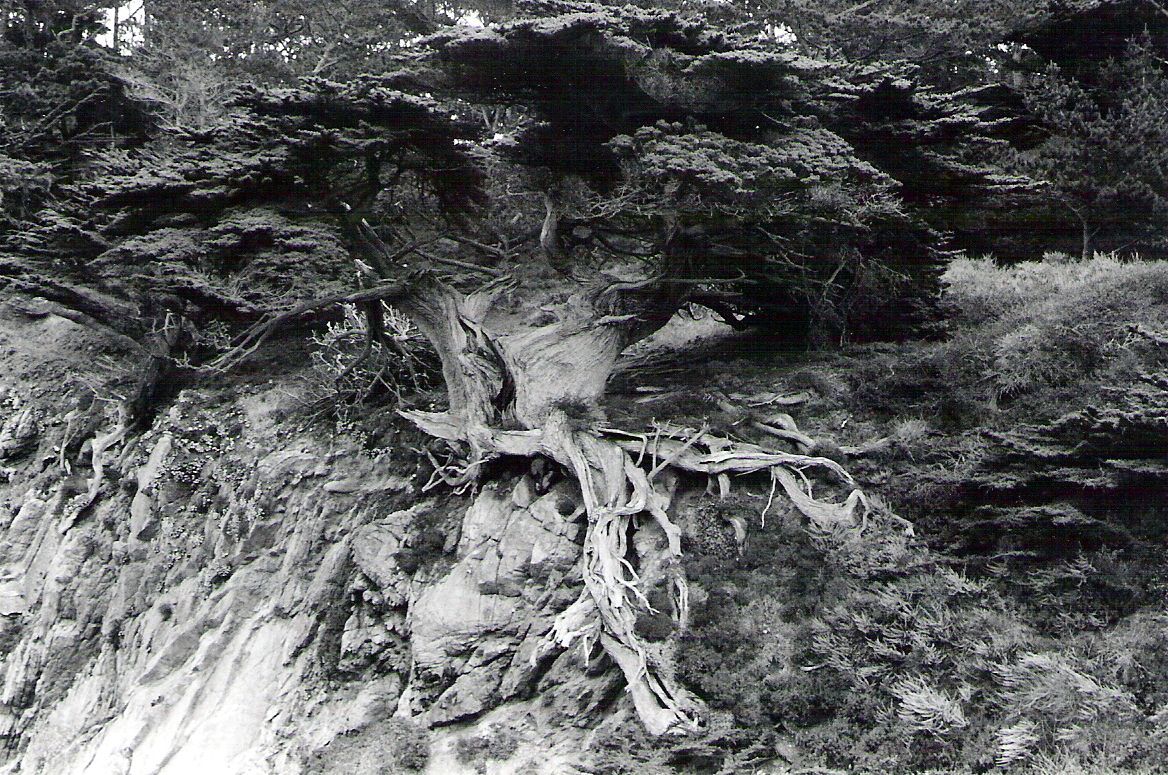
A few words and just a small reminder of the outside world...
Sometimes, I just have to take a break and remember that there's a real world out there. For all those who are working on frantically getting papers done, don't worry! We'll make it.

Monday, July 29, 2013
Mutually assured construction
Quite a cool demonstration today. Four of us sat in the middle of the room, surrounded by our classmates. We sat two at a table with our backs to the other pair and were handed 8 pieces of a 16 piece puzzle. We were allowed to talk, but not permitted to look at the other team's pieces. As a group of four, we worked to assemble the puzzle, half on each table.
The obvious message was one of working together and communication. In order to fully complete the task, we had to develop an easy way about talking through the process. We worked for a minute without communicating, getting a general "idea" before starting to discuss strategies as a whole.
I thought of a few other variations on the rules/parameters. As it was, we knew it was a 4 x 4 grid, we were told we had 8 of the 16 pieces and we were permitted to talk. A few other ideas:
The obvious message was one of working together and communication. In order to fully complete the task, we had to develop an easy way about talking through the process. We worked for a minute without communicating, getting a general "idea" before starting to discuss strategies as a whole.
I thought of a few other variations on the rules/parameters. As it was, we knew it was a 4 x 4 grid, we were told we had 8 of the 16 pieces and we were permitted to talk. A few other ideas:
- Suppose that we were only allowed to use 25 words. We'd have to figure out how to communicate with a limited vocabulary and carefully think about exactly what we're describing. Take this idea one step further - suppose we had a limit of 25 words, but were NOT given a list. Every word we spoke would be recorded and permitted. Once we passed 25 (or whatever magic number was decided), we would have to limit ourselves strictly to those. This would force an even more careful attention to our choices and being succinct.
- I also like the idea of printing the other team's pieces on the back of ours. This would make it ridiculously tough as we'd first have to discover who was paying attention to which pieces. I think this might be fun for a challenge for grad students, but would likely be far out of the reach of middle schoolers.
- The picture we had used exactly 16, non-repeating pieces. Each team had 8 of them. Suppose that 2 or 3 were repeated and there were ones missing. How would we resolve these issues? I think this would work well as a parallel to the scientific process. Frequently, you are forced to proceed with incomplete information and make inferences about what's missing.
Saturday, July 27, 2013
Corrupting America's Youth...with SCIENCE!
When we had a media specialist visit our class, she presented information about the endangered Pacific Northwest Tree Octobpus. The website is pretty convincing. If you were not skeptical enough, you run the risk of donating money to save this poor creature from certain extinction. The lesson is obvious - pay attention.
I was reminded of Carl Sagan's Demon Haunted World. In it, he explores many topics, ranging widely from crop circles, alien abductions, faulty scientific conclusions and fairy tales. One specific element resonated with me. In it, he presents his famous Fine Art of Baloney Detection. In it, he presents a set of tools students (and non-students) can use to assess the validity of claims. If you suspect something isn't right, chances are...there's something odd going on. I highly recommend the book to anyone.
It is my stated mission of teaching career to corrupt America's youth with science. By this, I mean to equip students with the tools to think critically about things they're told and to come to informed decisions.
Also...I'm obsessed with Carl Sagan...
I was reminded of Carl Sagan's Demon Haunted World. In it, he explores many topics, ranging widely from crop circles, alien abductions, faulty scientific conclusions and fairy tales. One specific element resonated with me. In it, he presents his famous Fine Art of Baloney Detection. In it, he presents a set of tools students (and non-students) can use to assess the validity of claims. If you suspect something isn't right, chances are...there's something odd going on. I highly recommend the book to anyone.
It is my stated mission of teaching career to corrupt America's youth with science. By this, I mean to equip students with the tools to think critically about things they're told and to come to informed decisions.
Also...I'm obsessed with Carl Sagan...
Technology!
Every time I write the word "technology", I imagine shouting it out with a strong emphasis on the even syllables...I'm sure there's a linguistic word for that, but I'm completely blanking on it. Also, I do the same with "SCIENCE!"...image every time you say the word "science", you must make a face, raise your fist and should "SCIENCE!". I think that might be a dangerous prescient to set in a classroom.
Regardless...about technology...specifically in the classroom.
There's a tendency for us to all rush towards that "new thing". Teachers feel compelled to "stay ahead of the curve" with new and exciting devices and apps. We have to understand the cutting edge and what's en vogue. To connect with students, do we really have to know the difference between pinterest and twitter? Are these things kids even use?
Considering the wealth of apps and devices available, I have been quite reticent to join the bandwagon. I recognize that the future is coming, bringing with it all sorts of new advances. I recognize that for students to excel in society, they will increasingly need to know how to incorporate technology into their lives. I recognize this all...
A curious thought routinely finds its way into my head. We are the last generation that can remember life without a cell phone or a computer. We didn't have a computer in the household until the middle of high school. I didn't even get a cell phone until I moved out of the dorms junior year. Yet now, I'm sitting here at home writing a message that will be available to whoever wants it and can get private messages on a small box in my pocket..
My question: what happens when we forget? What happens when we become so enthralled with our "technology" that we fail to look out the window and appreciate the rain? What happens when we no longer stop to investigate how swarms of ants will fight over a particular territory of sidewalk? What happens when we no longer remember what it feels like to be barefoot in a field of grass?
With each new "device" and "advancement", we run the risk of alienating something sacred. As I move into a classroom, I will reluctantly adopt the technology, but more importantly, I want to instill the belief that the natural world, sans computer, sans cell phone...is worth slowing down and simply marveling at. Take a moment. Turn off your phone, ignore your e-mail and feel the wet sand between your toes.

Regardless...about technology...specifically in the classroom.
There's a tendency for us to all rush towards that "new thing". Teachers feel compelled to "stay ahead of the curve" with new and exciting devices and apps. We have to understand the cutting edge and what's en vogue. To connect with students, do we really have to know the difference between pinterest and twitter? Are these things kids even use?
Considering the wealth of apps and devices available, I have been quite reticent to join the bandwagon. I recognize that the future is coming, bringing with it all sorts of new advances. I recognize that for students to excel in society, they will increasingly need to know how to incorporate technology into their lives. I recognize this all...
A curious thought routinely finds its way into my head. We are the last generation that can remember life without a cell phone or a computer. We didn't have a computer in the household until the middle of high school. I didn't even get a cell phone until I moved out of the dorms junior year. Yet now, I'm sitting here at home writing a message that will be available to whoever wants it and can get private messages on a small box in my pocket..
My question: what happens when we forget? What happens when we become so enthralled with our "technology" that we fail to look out the window and appreciate the rain? What happens when we no longer stop to investigate how swarms of ants will fight over a particular territory of sidewalk? What happens when we no longer remember what it feels like to be barefoot in a field of grass?
With each new "device" and "advancement", we run the risk of alienating something sacred. As I move into a classroom, I will reluctantly adopt the technology, but more importantly, I want to instill the belief that the natural world, sans computer, sans cell phone...is worth slowing down and simply marveling at. Take a moment. Turn off your phone, ignore your e-mail and feel the wet sand between your toes.

Tuesday, July 23, 2013
A brief, brief post on other blogs
I've officially looked at one other teacher's blog tonight...so I doubt I have a valid sample size. I found this one and immediately found a student video that features machine guns and missiles as two theories for the extinction of dinosaurs:
10 Reasons the Dinosaurs are Extinct
Needless today, I think I've found inspiration for having students do videos and for having a public forum to post creative student work.
10 Reasons the Dinosaurs are Extinct
Needless today, I think I've found inspiration for having students do videos and for having a public forum to post creative student work.
Biology, the game of Life
Recently, we've been discussing the use of game and gaming in a classroom setting. I've never been a huge fan of video games, but I remember fondly the days of Number and Word Munchers. We'd spend our "free time" in class learning sight words and multiplication tables. For history, we'd routinely play Oregon Trail and "learn" all about the westward migration. Many tragic days, we found that our ox had died, Timmy had lost a leg or somebody got some random disease. We rolled the dice to see if we'd successfully ford a river. In math, we even went so far as programing simple games along the lines of Snake and Rodent's Revenge. Each game taught us simple problem solving skills, mathematical formulas, historical "lessons", homework avoidance techniques and many other important life skills. On the other hand, all utility aside, what lessons have been dumbed down to scientifically inaccurate and when does that matter?
Today, I seem to have forgotten this element of childhood. What games now would work? What would entice students now? I recently attempted to play a game called Caduceus. The premise, I'll admit, was pretty cool. You essentially start out as a student at an academy and are asked to go to some high council to help solve a pressing problem...never mind why. You are tasked with analyzing phlegm slides for a dangerous contagion. While slugging your way through endless samples, you cut your finger and you have a Eureka! moment and decide that the problem must be in the blood. This is where the game actually begins...as do the problems with it. You are asked to locate the "unique" cells in a slide in order to determine which one(s) is/are responsible. While teaching kids to analyze evidence for minute details is useful, no diseases are going to be "unique". I felt this task not only boring, but horrible inaccurate for processes. Why not have students find the most common? After about 10 minutes of clicking matches, I "won" and was then taken to a page where I'd have to start an account.
Now, I propose another game that might be fun in the classroom. Laws of physics seem to hold (save for a few...which are described as "advances in technology") and your only task is to solve the puzzle. Portal has become one of my favorite games. You must go through a series of strategic challenges to come to an answer. There are no other characters and only a few minor gaps in scientific accuracy (save for the whole...in the future thing).
I think there is a future for gaming in school because of the simple fact that kids love games. If you can find ones that are 1) fun, 2) challenging and 3) accurate, then you're set. The problems begin when you're lacking in any of these categories.
Today, I seem to have forgotten this element of childhood. What games now would work? What would entice students now? I recently attempted to play a game called Caduceus. The premise, I'll admit, was pretty cool. You essentially start out as a student at an academy and are asked to go to some high council to help solve a pressing problem...never mind why. You are tasked with analyzing phlegm slides for a dangerous contagion. While slugging your way through endless samples, you cut your finger and you have a Eureka! moment and decide that the problem must be in the blood. This is where the game actually begins...as do the problems with it. You are asked to locate the "unique" cells in a slide in order to determine which one(s) is/are responsible. While teaching kids to analyze evidence for minute details is useful, no diseases are going to be "unique". I felt this task not only boring, but horrible inaccurate for processes. Why not have students find the most common? After about 10 minutes of clicking matches, I "won" and was then taken to a page where I'd have to start an account.
Now, I propose another game that might be fun in the classroom. Laws of physics seem to hold (save for a few...which are described as "advances in technology") and your only task is to solve the puzzle. Portal has become one of my favorite games. You must go through a series of strategic challenges to come to an answer. There are no other characters and only a few minor gaps in scientific accuracy (save for the whole...in the future thing).
I think there is a future for gaming in school because of the simple fact that kids love games. If you can find ones that are 1) fun, 2) challenging and 3) accurate, then you're set. The problems begin when you're lacking in any of these categories.
Subscribe to:
Posts (Atom)